

Buying directly from China can look attractive when you first compare product prices.
A supplier quotation may be lower than a local wholesale price, so it is easy to assume that importing directly will automatically create more margin. In practice, that is not always what happens.
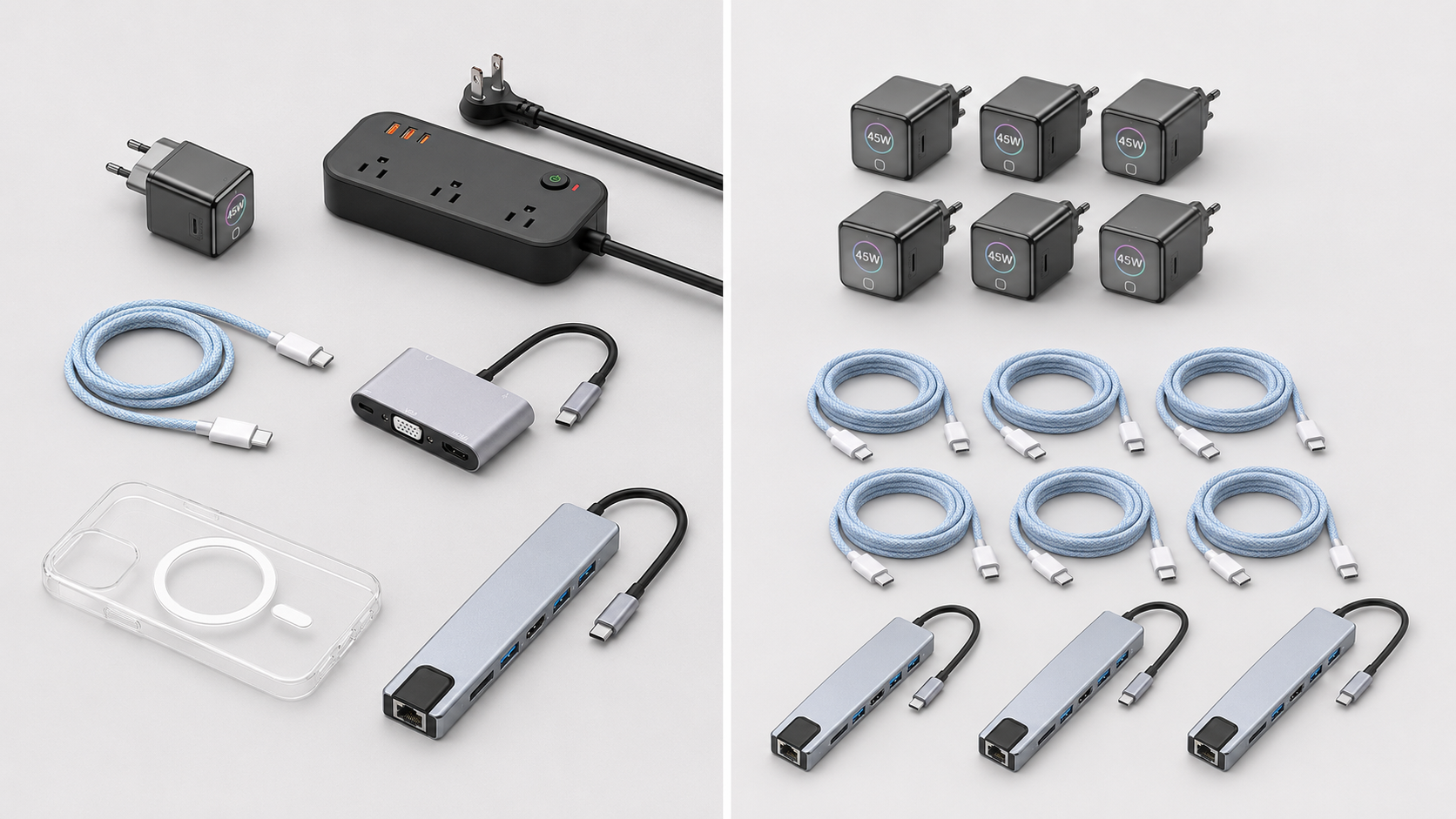
A retailer planning a first direct-import order recently faced a common decision: start with a wide range of mobile and electronics accessories, keep the quantity of each item low, and use the order to see what customers actually want.
That sounds sensible, but international freight and other import costs can make a highly mixed, low-volume order expensive per unit.
The important question is not “Is the China unit price lower?” It is:
“Does direct sourcing create enough total business value to justify importing?”
The EXW Price Is Not Your Real Cost
A lower supplier price may not be cheaper by the time the product reaches your warehouse or store. The meaningful comparison is landed cost: product cost, international freight, duties and taxes where applicable, customs and clearance, local delivery, and packing or handling requirements.
Freight also changes with product mix, quantity, weight, carton volume, shipping method and battery content. Comparing an EXW quotation directly with a local wholesale price can therefore be misleading. The order structure must be reasonably clear before the commercial comparison becomes useful.
Why Small Mixed Orders Can Be Expensive Per Unit
A common first-order idea is: “Give me many different products, but only a few pieces of each.”
A broad mixed order can help a buyer check product quality, compare styles or configurations, show products to customers, learn what attracts demand, and evaluate a supplier before committing more volume. It is mainly a market, quality and supplier validation order.
But it may not produce the best resale margin. Freight and import costs are spread across fewer units, so the buyer gains variety but often loses cost efficiency.
A focused commercial trial chooses fewer SKUs and concentrates quantity on products with a stronger chance of repeat sales. It sacrifices some variety but can improve freight allocation and provide a more realistic test of resale margin.
Neither approach is automatically better. Ask: “What does the first order need to prove?” If the goal is learning, variety may justify the cost. If the goal is proving margin, a focused mix may make more sense.
Local Wholesale Can Sometimes Be the Better First Step
Direct importing is not the correct answer for every buyer. A local wholesaler can offer smaller replenishment quantities, faster availability, less customs administration, easier stock replenishment and lower operational complexity.
Those advantages can be significant for a small or early-stage business buying standard products that are widely available locally, especially when the first direct-import order would be very small.
If the Cost Is Similar, What Else Are You Gaining?
Direct sourcing can still make sense when landed cost is close to the local wholesale price, but there should be another business reason.
More product choice
A wider supply base can offer more configurations, colors, specifications and packaging options, giving buyers more control over their product range.
Better control over quality and specifications
Products that look similar can perform differently. Direct sourcing gives the buyer more ability to define requirements for output, materials, compatibility, durability and repeat-batch consistency.
Private label and branding
A growing retailer or distributor may want its own logo, packaging, labeling or branded product range—flexibility that local finished stock may not provide.
OEM and ODM possibilities
When the project and volume justify it, working closer to the supply chain can create room for customization and product development that is not readily available locally.
Building a repeatable supply program
Once the buyer knows what sells, direct sourcing can provide more control over specifications, packaging, quality expectations and repeat orders. That may matter more than a small saving on the first shipment.
How Shenzhen iTop Electronics Can Help
Shenzhen iTop Electronics does not believe every buyer should import directly from China simply because the supplier unit price looks lower. A better first step is to understand what the order needs to achieve.
Shenzhen iTop Electronics can help buyers work through five questions:
- Is the order mainly for market validation or resale margin?
- Which products deserve small test quantities, and which need more volume?
- What quality level does the target market need?
- Are better product choice, private label or OEM/ODM flexibility important?
- What information is needed to compare freight and landed cost properly?
The right first order may be a broad selection designed to learn, a smaller range with more commercial quantities, or a decision to continue buying locally until the business has enough volume or a stronger reason to import.
Its purpose should not simply be to maximize SKU count or place an order. It should provide useful evidence for the next purchasing decision.
Planning a Direct Order From China?
Shenzhen iTop Electronics can help you compare a broad test selection with a focused commercial trial before you commit to a wider product range.