

An established distributor preparing a charger-range refresh initially shortlisted several wattages and port configurations. None of the individual products was necessarily wrong. The problem appeared when the team mapped each option to a customer need: several SKUs could end up serving essentially the same everyday charging situation.
Opening all of them at once would create separate stock, packaging, forecasting and replenishment decisions without necessarily producing better information about demand. The issue was not a lack of choice. It was a lack of distinct commercial roles.
So how do you decide whether another charger actually deserves a place in the range?
A First Range Should Answer Questions, Not Maximize SKUs
A first range is an inventory decision, but it is also an information-gathering tool. It should help the buyer learn which charging situations matter, which customer groups need genuinely different solutions, which price and quality positions deserve separate offers, and which product differences customers actually value.
That means each sample or trial SKU should test a useful assumption. One might test whether mainstream buyers want a compact daily option. Another might test whether a clearly different multi-device use case earns enough interest to justify more stock. If two products test the same assumption, carrying both may create noise rather than insight.
Give Every SKU a Clear Job
Possible roles include everyday charging, an upgrade option, multi-device charging, or higher-performance and notebook-related use. These are examples, not a checklist. A distributor does not need all four unless the market and channel make each role commercially useful.
| Range Role | Buyer Question | Reason to Carry It |
|---|---|---|
| Everyday / mainstream | Who needs a straightforward daily charger? | Creates a clear core offer for the largest relevant customer group. |
| Upgrade option | What useful benefit justifies a step up? | Separates a higher value position that customers can understand. |
| Multi-device | Is desk, travel or simultaneous use a distinct demand? | Serves a usage pattern the core SKU does not cover well. |
| Higher-performance / notebook | Which devices or buyers require a more demanding solution? | Extends the range into a credible higher-use-case role. |
Do not add a SKU unless you can explain why it exists. For every proposal, ask:
- Who is it for?
- What charging situation does it cover?
- What makes it meaningfully different from the adjacent SKU?
- What commercial reason justifies carrying it?
If the answers are almost identical to the product beside it, the new model is probably overlap, not coverage.
Wattage Is a Filter, Not a Reason to Create Another SKU
Two chargers with different wattages do not automatically serve different customers. Two chargers with the same wattage may also have different commercial roles because of port configuration, device coverage, protocol compatibility, size, construction or intended usage.
Wattage helps filter products. It does not by itself define the role of a SKU. For the technical factors behind real charging behaviour, see Charging & Cable Solutions. Broader specification and risk considerations are covered in Quality Standards.
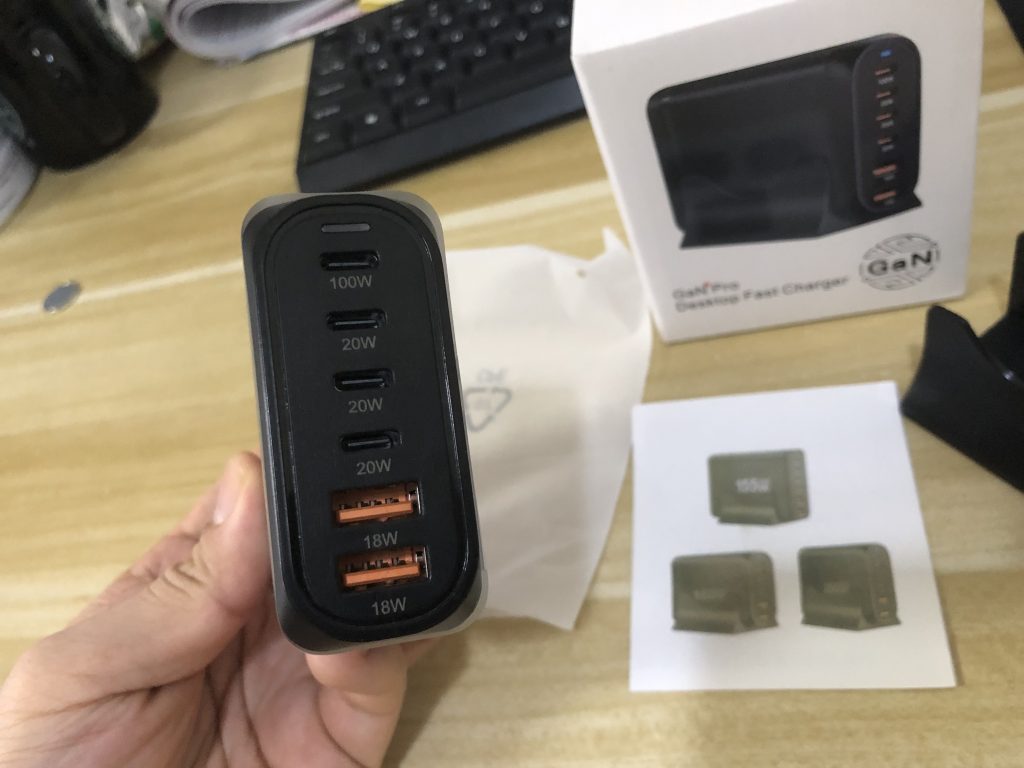
Build the Sample Set Around Buyer Use Cases
Start with customer situations, not the size of the supplier catalogue. The relevant situations might include everyday phone charging, phone and tablet use, notebook charging, travel, or a desk with several devices. The buyer should select only the situations that are credible for the target market.
- Commercial role: what decision will this sample help the buyer make?
- Charging requirement: which devices and usage pattern must it cover?
- Port configuration: does the customer need one port or a distinct multi-port setup?
- Cable pairing: what cable is needed for the intended device and use case?
- Compatibility: which real device combinations should be reviewed?
- Market position: what price and perceived quality level should the offer occupy?
This turns the sample set into a comparison plan. It also makes it easier to remove an option that looks attractive in isolation but does not add a new reason to buy.
Use Samples to Decide Which SKUs Deserve Inventory
Sampling is not simply checking whether a charger turns on. It is the stage for comparing device compatibility, actual user convenience, physical size and handling, port layout, packaging and positioning, perceived quality level, and whether two proposed SKUs are too similar.
Each sample should have a decision attached to it: keep, change, combine, replace or remove. A successful sample can support that range decision, but it does not prove that future repeat batches will remain consistent. That separate issue belongs in the controls described in Testing & Production Consistency.
Narrow the Range Before Expanding It
A focused first range is not a permanent small range. It creates better evidence for the next expansion. Once the buyer knows which charging needs matter, which customer groups respond, which price positions work and where genuine gaps remain, another wattage or port configuration can be added for a clear reason.
Do not open a SKU simply because a supplier has it. Add it when the range can state the customer, use case and commercial gap it is meant to cover.
How Shenzhen iTop Electronics Approaches Charger Range Selection
Shenzhen iTop Electronics can compare the buyer’s target devices, customer use cases, current charger range, wattage and port overlap, quality position, cable pairing and the gaps the buyer believes still exist.
Review current range → identify overlap and gaps → select comparison samples → validate → open a trial range → expand with evidence.
This follows the same decision-led approach described in How We Work, while keeping the article’s focus on whether each charger deserves inventory.
Planning a Charger Range but Not Sure Which SKUs Deserve a Place?
Share your target market, customer and use cases, current charger range, and the areas you want to improve. Shenzhen iTop Electronics can help narrow a practical comparison set before you commit inventory across too many overlapping models.