

During an OEM review for a customized connectivity product, the early request sounded straightforward: move a connector, adjust the housing, change the cable exit and add one function. Each point looked small when discussed separately.
Once the team considered the physical product, however, those changes touched port openings, internal space, component layout and the way the product would be assembled. If the requirements remained unclear after tooling started, the project could move into rework before the buyer and supplier had agreed on the same product.
The practical buyer question is: what needs to be clear before tooling starts?
Early Product Exploration and Tooling Are Different Stages
Early product exploration should leave room to compare options. A buyer may still be deciding which functions matter, whether an existing platform can be adapted, or which appearance direction fits the market. Forcing every detail to be final at this stage can close useful alternatives too soon.
Tooling is different. It is a commitment point for the product’s physical structure. Before that commitment, the requirements that affect geometry, interfaces, assembly and required function should have an approved reference. The broader OEM & Product Development process can help review feasibility; this article focuses on the decisions that must become clear before tooling begins.
Do not force specifications too early. Do not leave them unclear too late.
Which Requirements Should Be Clear Before Tooling?
The exact checklist depends on the product. A charger, hub, docking product and passive accessory do not require the same information. The following groups help buyers identify what may become tooling-critical.
Functional requirements
- Required functions and any combinations that must work together
- Charging, data or display capability where relevant
- Target device, user situation and performance expectation
Physical requirements
- Housing dimensions and important clearances
- Connector and port positions
- Cable exit direction, mounting points and assembly points
- Button, opening or indicator locations where relevant
Interface requirements
- Connector types and number of ports
- Port spacing and access around each opening
- Intended cable, power supply or accessory pairing
Appearance requirements
- Housing finish and realistic color requirement
- Logo position, especially if the housing includes a molded or recessed area
- Visible structural constraints that affect the approved form
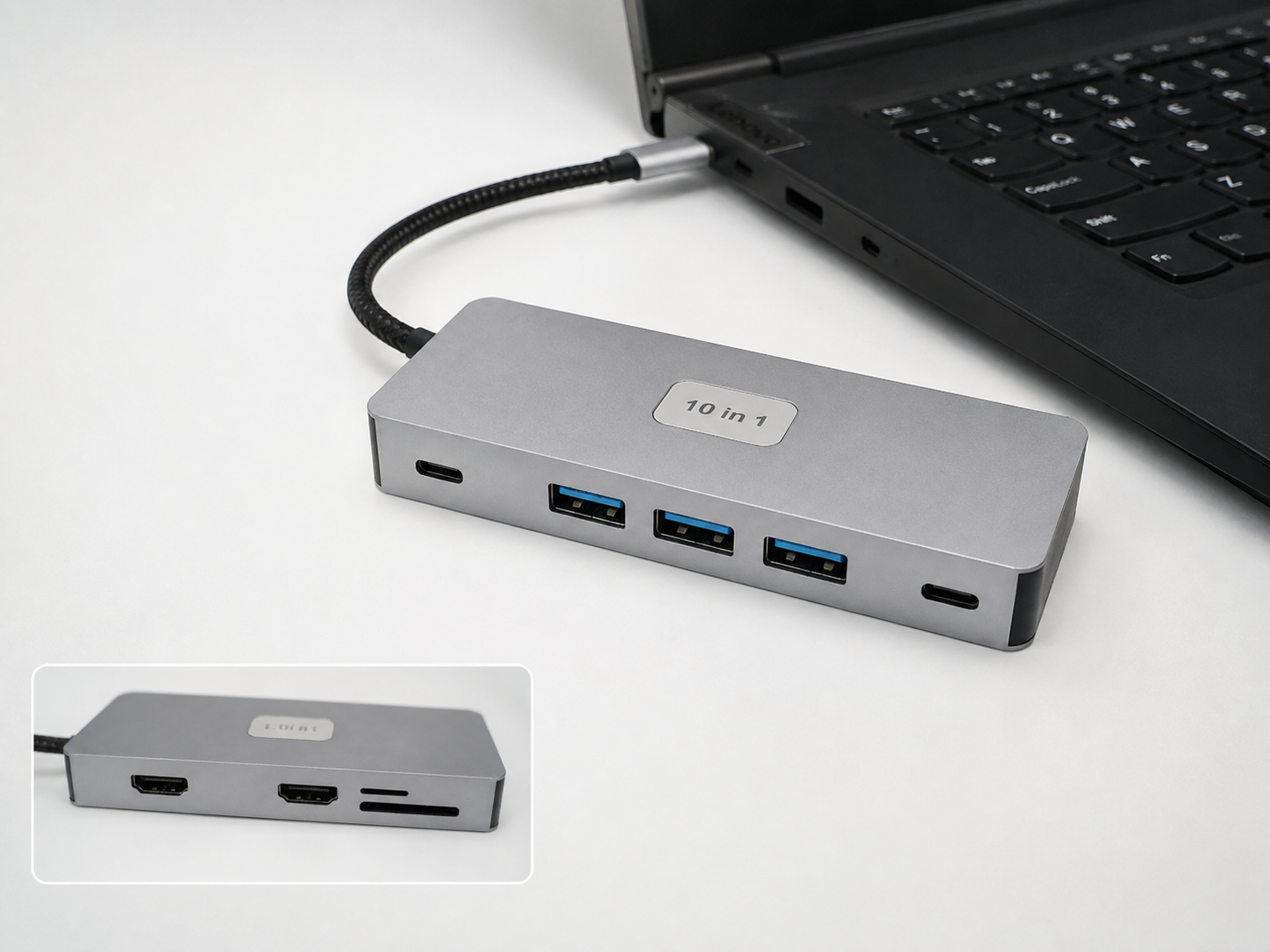
Why Small Specification Changes Can Become Expensive Later
A late change is not expensive because it looked large on the original request. It becomes expensive when it affects work that has already been approved or completed.
- A housing or opening change may require a tooling revision.
- A port or function change may require component or layout review.
- A revised product shape may require a new sample and packaging artwork adjustment.
- A changed reference can restart part of the approval cycle.
- Each repeated decision can push the launch schedule later.
The commercial consequence is more than a tooling invoice. Purchasing, engineering, packaging and sales teams may all need to review the product again. Clear requirements before tooling reduce avoidable disagreement over what was approved.
Separate Flexible Decisions From Tooling-Critical Decisions
Not every decision must be locked at the same time. The useful distinction is whether a choice changes the physical architecture or only refines how an already approved product is presented.
Still Flexible During Exploration
- Alternative functions or platforms being compared
- Non-structural color or finish options within a known process
- Final packaging copy when the product geometry is unchanged
- Printed logo artwork that uses an already approved area
Should Be Locked Before Tooling
- Required functions that determine the product architecture
- Housing dimensions, clearances, openings and assembly points
- Connector types, port count, position and spacing
- Cable exit, molded logo areas and other structural branding features
The boundary is project-specific. A color can become tooling-critical if it requires a different material or surface process. Packaging can become critical if it must fit a fixed product shape. Buyers should ask what each open decision can still affect.
Use an Approved Reference Before Tooling Begins
Buyer and supplier should be working from the same approved reference. Depending on the project, that reference may combine a drawing, dimensional record, physical sample, port and function list, material or finish confirmation, labeling and branding positions, and an agreed product specification.
One document does not solve every project. What matters is that the reference is specific enough to show which version is approved, which points are fixed and how later changes will be identified. Approval should also name the items that remain intentionally open, so flexibility is not mistaken for an omission.
Tooling Approval Is Not the End of Validation
Tooling approval confirms a development direction; it does not prove the finished product is ready for production. The resulting prototype or sample still needs functional validation, compatibility checks, physical review, packaging confirmation and the production checks appropriate to that product.
For the broader risk framework, see Quality Standards. For the distinction between an approved sample and repeat-batch control, see Testing & Production Consistency.
How Shenzhen iTop Electronics Approaches OEM Specification Review
Shenzhen iTop Electronics reviews the product direction and feasibility first, then identifies the requirements that must be clear before tooling.
Product direction → feasibility review → clarify tooling-critical requirements → approved reference → tooling and sample → validation → production.
This sequence complements the communication and decision process described in How We Work.
Planning an OEM Product but Still Clarifying the Details?
Share the target product, existing reference or sample, intended functions, important physical changes, market and use case, and approximate project stage. Shenzhen iTop Electronics can help review which requirements should be clarified before the project moves into tooling.