

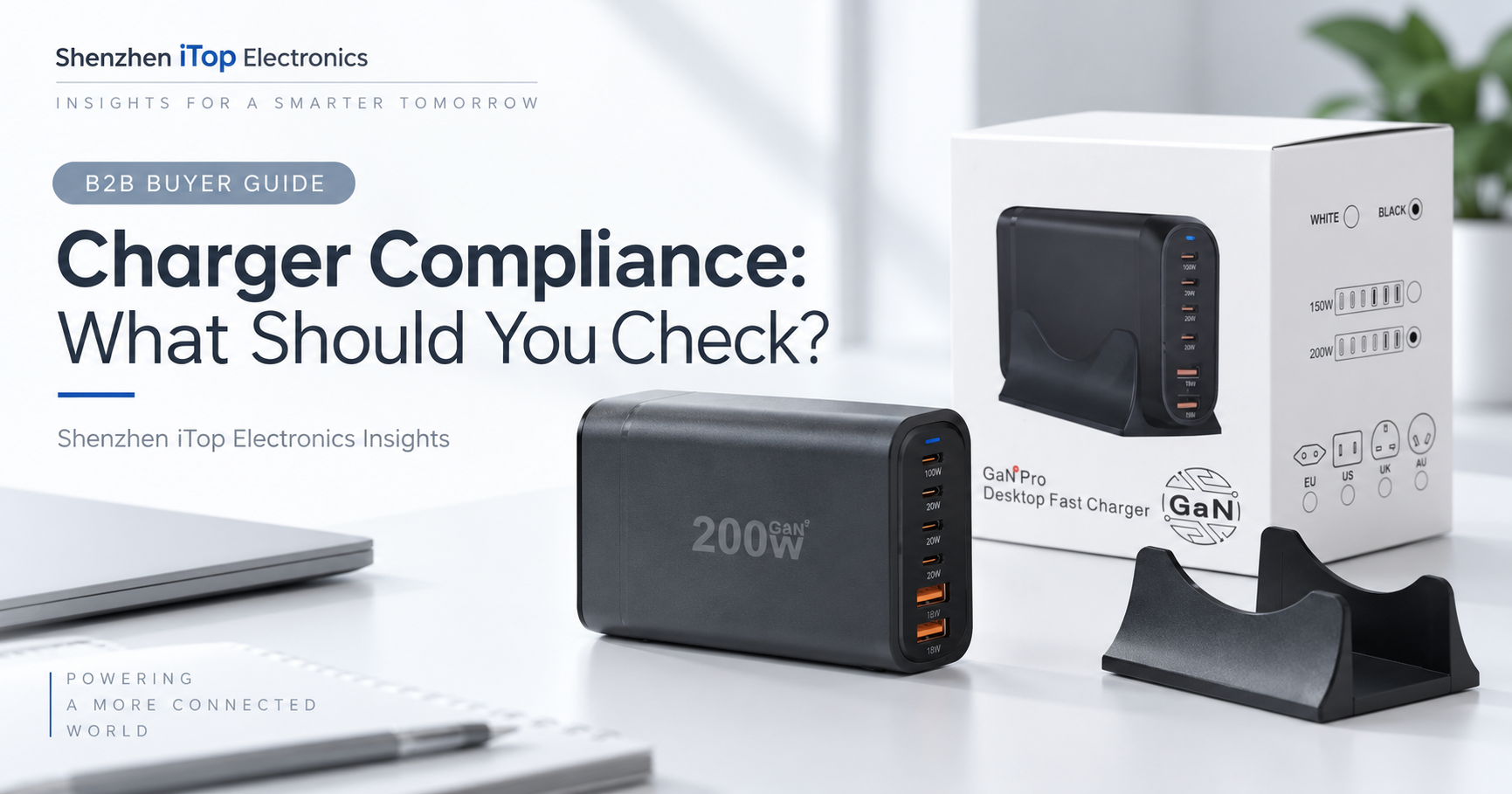
A long-term distributor partner recently sent us a clear requirement for a desktop charger project:
“Any sample we submit would need these certifications from an internationally accredited lab.”
Their list included:
- EU Declaration of Conformity
- EN 62368-1 test report from an ISO/IEC 17025 accredited laboratory
- EMC and RoHS test reports
- Specific UK conformity, plug and fuse requirements for the UK version
The important point was not the length of the list.
The important point was that the product had to meet the customer’s approval requirements before the sample could move forward.
For a B2B buyer, this is why charger sourcing should not start with wattage and price alone.
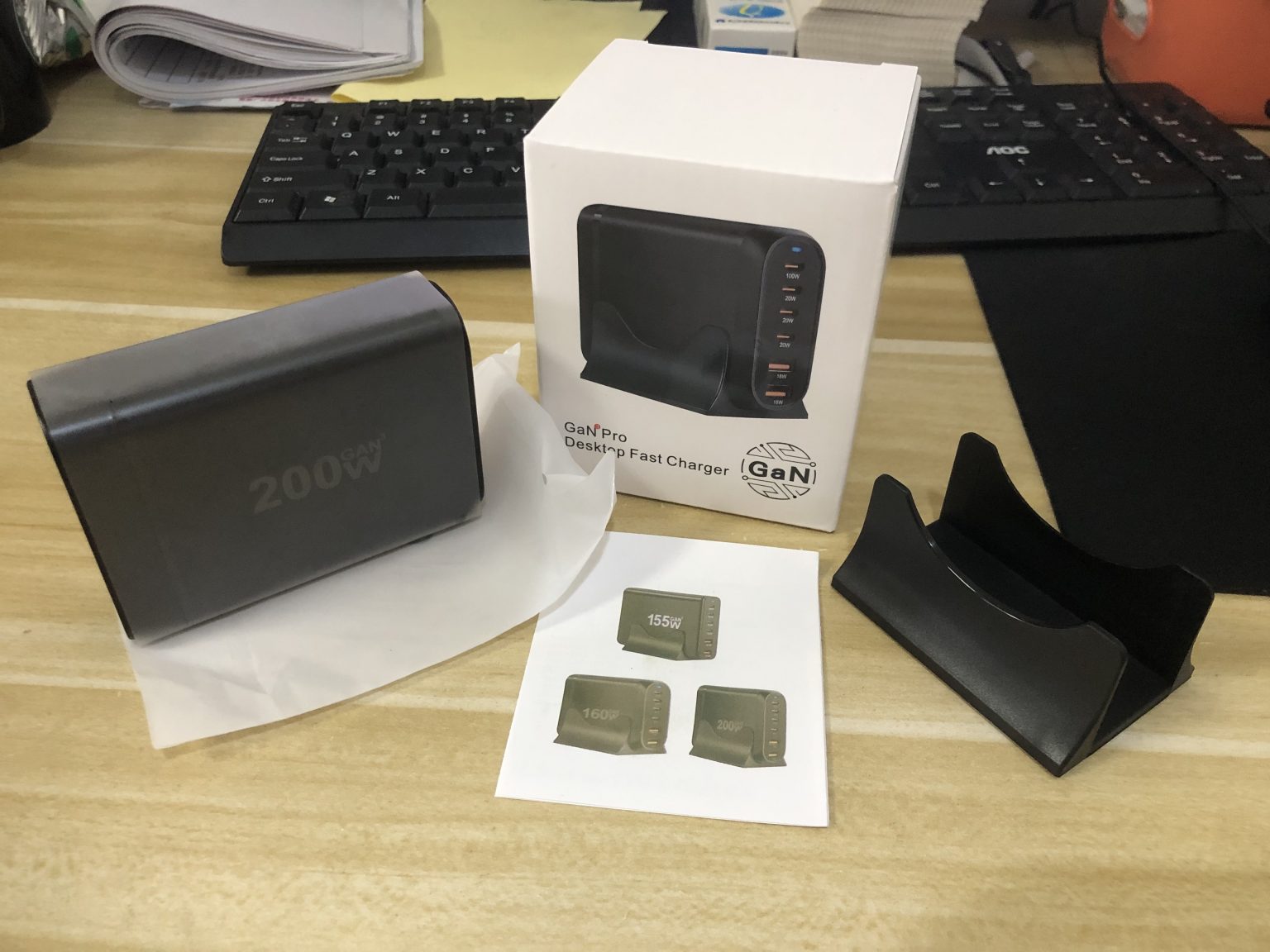
What compliance documents should I ask my charger supplier for?
There is no single document list that fits every charger project.
What you need depends on:
- where the product will be sold
- the exact product and plug version
- your own company requirements
- your end customer’s approval process
For example, one buyer may only need the normal documents required for its market.
Another distributor may be supplying a large corporate customer with its own approval checklist.
That second project may need more information before a product can even be submitted for evaluation.
This is why Shenzhen iTop Electronics prefers to ask about the market and approval requirements early.
Is asking “Do you have CE and RoHS?” enough?
Not always.
“Do you have CE and RoHS?” is one of the most common questions in charger sourcing.
It is a useful starting point, but it may not tell you enough.
A better discussion may include questions such as:
- Do you have an EU Declaration of Conformity for this product?
- Which exact model does the document cover?
- What safety test report is available?
- Was the requested testing done by an ISO/IEC 17025 accredited laboratory?
- Do you have EMC and RoHS test evidence?
- Does the plug version match our market?
- Will the same product configuration be used for production?
Buyers should also verify whether a manufacturer-issued Declaration of Conformity covers the exact charger being supplied.
ISO/IEC 17025 is an international standard used to demonstrate the competence and consistent operation of testing and calibration laboratories.
IEC 62368-1 is a safety standard covering audio/video, information and communication technology equipment, including relevant external power supply applications.
Why should I check these documents before ordering samples?
Because the sample is not always the beginning of the project.
For many distributors and project buyers, the sample is something they will submit internally or send to an end customer.
If the compliance requirement is only checked after the sample has been selected, the project may have to go backwards.
This is why it helps to confirm compliance before sample approval.
For example:
Product selected
→ quotation agreed
→ sample prepared
→ customer asks for compliance evidence
→ documents do not match the product
→ supplier needs to review the design or components
→ new sample may be required
That means more work for both buyer and supplier.
It can also affect the approval timeline.
What if the buyer does not know exactly what to ask?
That is normal.
Buyers do not need to know every compliance detail.
A good supplier should help identify what needs to be checked before it becomes the buyer’s problem.
If we know a charger is going into a distributor, enterprise or project customer approval process, we would rather ask the questions early:
What market?
What plug?
What documents?
What test reports?
Does the end customer have its own approval list?
These questions can prevent a lot of unnecessary work later.
Does having the same charger housing mean the compliance is the same?
No.
Two chargers can use a similar housing and still have differences in:
- PCB design
- components
- protection design
- thermal design
- EMC filtering
- plug and fuse configuration
- test evidence
- approved product configuration
This is one reason price comparisons based only on the outside appearance can be misleading.
Why Can Two Chargers Using the Same Housing Have Very Different Prices?
What should I check before approving a charger?
A simple starting checklist is:
- Which market will this charger be sold in?
- What does my company or end customer require before approval?
- Which documents are available for the exact model?
- Which test reports support those documents?
- Does the plug version match the target market?
- Will the production product stay the same as the version being approved?
- If something is missing, will it change the product, price or timeline?
These questions are usually more useful than simply asking whether the supplier has “certificates.”
How Shenzhen iTop Electronics approaches charger projects
Shenzhen iTop Electronics does not treat compliance as paperwork to check at the end.
We prefer to understand the approval requirement before the product, quotation and sample are locked.
The buyer may not know every question to ask.
Our job as a supplier is to point out the issues we believe should be checked, explain them clearly, and help reduce avoidable project risk.
If you are reviewing a charger for a distributor, retail program or enterprise customer, share the target market, product specification and approval requirements first.
We can help check whether the product direction and available documents are suitable before you spend more time on samples.