

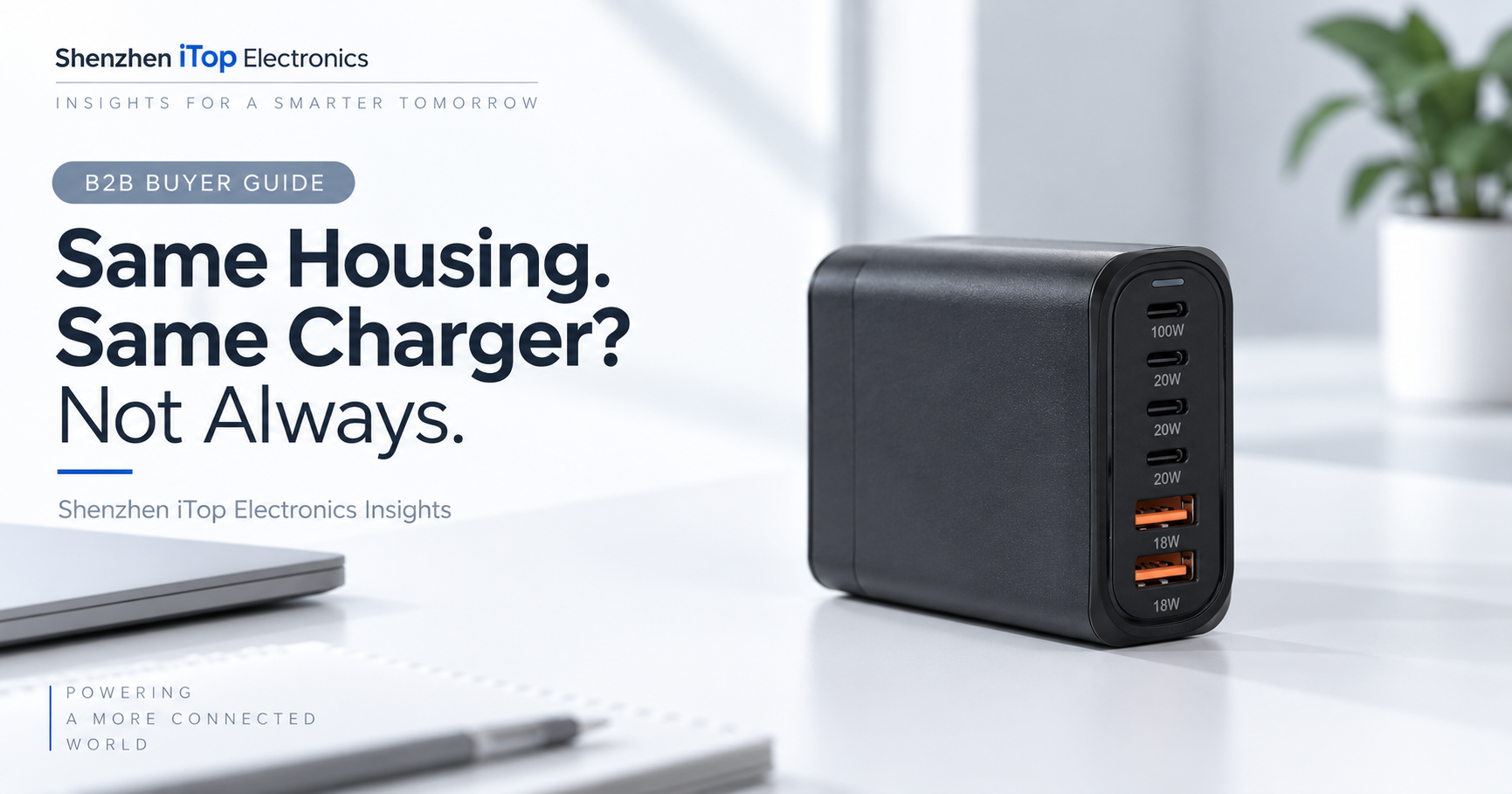
A common buyer question is:
“Why is your charger more expensive? The other supplier has the same mold.”
It is a fair question.
From a photo, two chargers may look almost identical.
They may both say:
200W.
They may both have the same number of USB-C and USB-A ports.
They may even use a very similar public housing.
So why can the quotations be different?
Because the housing is only the part you can see.
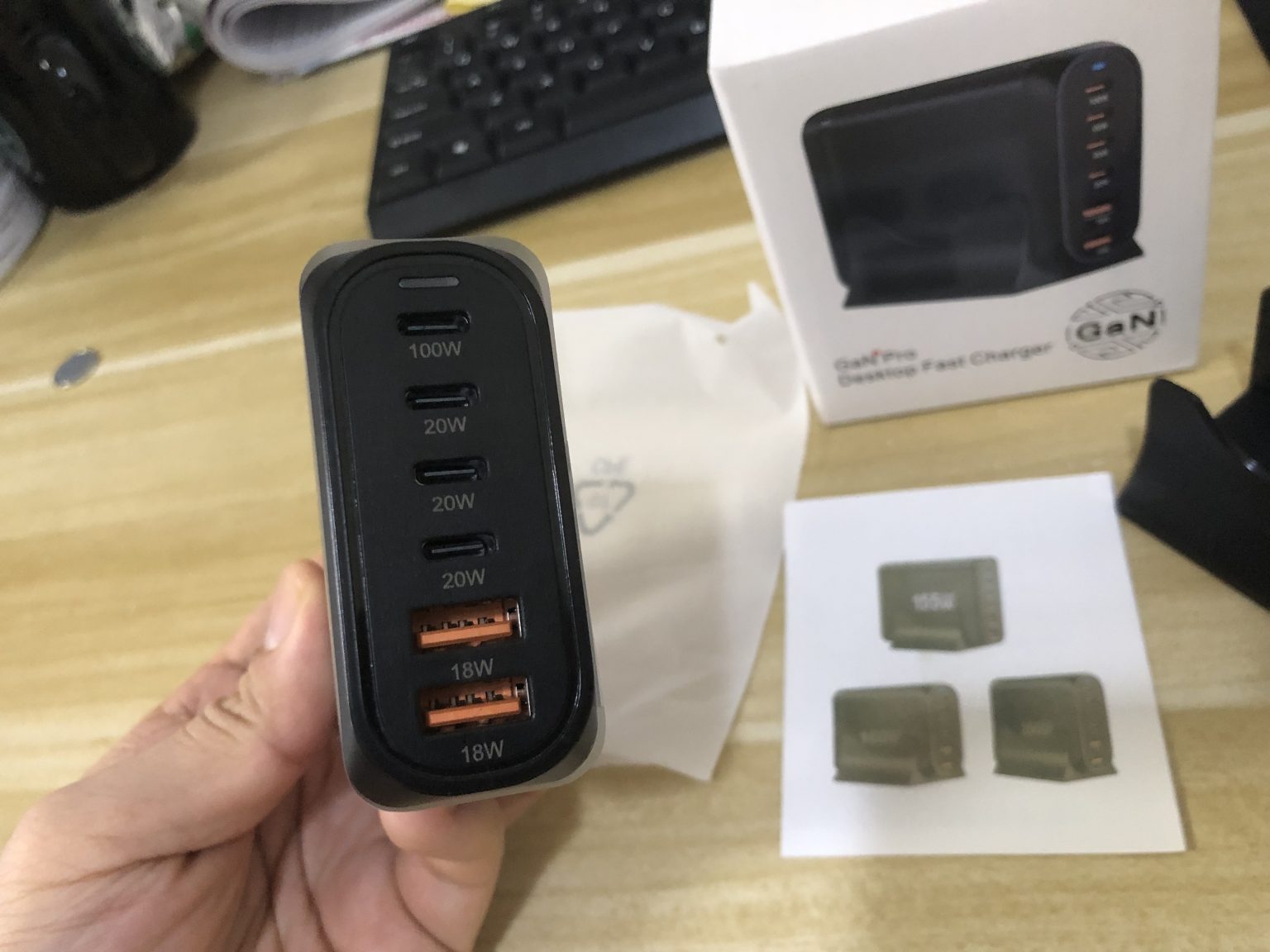
Does the same public mold mean the chargers are the same?
No.
A similar housing does not tell you whether the products have the same:
- PCB design
- components
- power architecture
- thermal design
- protection design
- EMC filtering
- plug configuration
- test evidence
- compliance scope
This does not mean the higher-priced charger is automatically better.
It means the buyer needs to check whether the two quotations are based on the same requirement.
What should I compare besides wattage and ports?
Suppose two suppliers both quote a 200W desktop charger.
Supplier A quotes an existing standard version.
Supplier B knows from the beginning that the product must meet a defined end-customer approval requirement and provide specific supporting documents.
Those may not be the same quotation.
Before comparing the final price, ask:
- Is the power specification really the same?
- Are the charging protocols the same?
- Is the internal component level the same?
- Is the safety design the same?
- What compliance evidence is available?
- Does that evidence cover the actual product?
- Will any changes be required before customer approval?
Buyers should also check which compliance documents the exact charger needs.
Now the price comparison becomes more meaningful.
Why does the price sometimes change after I ask for certification?
This is another common sourcing situation.
The buyer finds a charger.
The price looks good.
Then the buyer asks:
“Can you provide the documents our customer requires?”
The supplier replies:
“If you need that certification, we need to change some components.”
Why?
One possible reason is that the first quotation was based on a different product requirement.
The existing version may need additional review or changes before it can support the new approval requirement.
Depending on the product, this could affect areas such as:
- components
- PCB design
- insulation or safety design
- EMC filtering
- thermal design
- plug or fuse arrangement
It does not mean every compliance request will require a redesign.
But buyers should know before approving the product whether a change is needed.
It is better to check compliance before the sample approval stage.
Is the cheaper quotation wrong?
Not necessarily.
A lower-cost charger may be perfectly suitable for another customer, market or sales channel.
The problem starts when two products built for different requirements are compared as if they were identical.
A buyer who only needs a basic commercial product may make one decision.
A distributor supplying an enterprise customer with a formal approval process may make another.
The right product depends on what the buyer actually needs.
What question should I ask when two charger prices are very different?
Instead of asking only:
“Why are you more expensive?”
Try asking:
“Are both quotations based on the same product and compliance requirements?”
Then compare the answer.
This changes the discussion from price alone to product scope.
Why this matters for enterprise and distribution buyers
If your end customer has a formal engineering or compliance review, the cheapest initial quotation may not always create the lowest project cost.
A mismatch found later can lead to:
- more supplier communication
- product changes
- repeated samples
- more testing
- internal re-approval
- delays
These are costs too, even if they do not appear on the first quotation.
How Shenzhen iTop Electronics approaches price comparison
Shenzhen iTop Electronics is not trying to tell buyers that the most expensive product is always the best one.
It is not.
We want to understand what the product needs to do and what approval requirements it needs to meet.
Then the buyer can compare quotations on the same basis.
For charger projects, that may mean checking the power, protocols, internal design, product evidence and target market before deciding whether two apparently similar products are really the same offer.
If you are comparing two charger quotations and the price gap does not make sense, share the required specification and approval requirements.
The first step is to make sure you are comparing the same thing.